Leili Zhang

Leili Zhang

IBM

Small Molecule Drug Discovery Challenge Lead

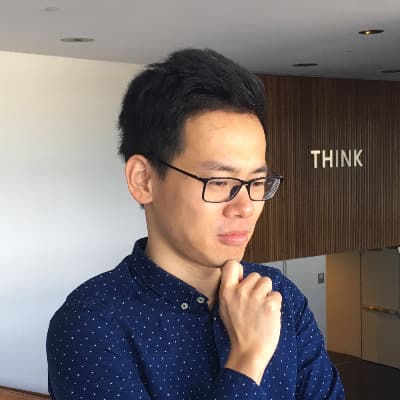
Leili Zhang’s ultimate goal is to emulate the world in a nutshell. With that goal out of the reach (temporarily), he settles for molecular dynamics simulations on biological systems. Working in Healthcare and Life Sciences, he’s had the privilege of working with top notch scientist in computational biophysics, healthcare and AI. With the combined expertise, novel algorithms, molecule designs, and computational tools are made to solve real world problems. His expertise is on drug discovery, protein folding, protein-membrane interactions, protein-protein interactions and protein-material interactions. Most notably, He have had three major projects in the past: (1) the invention of a fast membrane-protein free energy calculation method; (2) the identification of the coevolution of two subdomains in Huntingtin protein; and (3) the creation of CASTELO.
Talk: "Industrial Career for Computational Chemists"

Applications of computational chemistry are widespread in the chemical and pharmaceutical industries. With rapid progress in AI coding assistants and agentic AI, corporations are currently working to bridge the gap between their existing knowledge base and emerging technologies. Learning to engineer, guide, and critically audit AI tools can help position early career scientists for meaningful employment opportunities and participation in next-generation scientific discoveries. Methodology developments have enabled industrial researchers to use hybrid workflows that connect simulations, AI/ML methods and quantum mechanics to process and generate large amounts of data. In this talk, I will present examples of industrial applications including small molecule drug discovery, antibody discovery and intrinsically disordered protein structure prediction and describe how hybrid workflows can be packaged into agentic workflows that further accelerate research. I will emphasize the need for developers to set guardrails that ensure both accuracy and reliability when using automated workflows, keeping in mind that AI coding agents are good at generating syntax and automating routine tasks but lack the creative intuition and deep scientific reasoning that trained researchers bring to the table.