










Count the day
until conference start

event

Collaborating to Improve Undergrad Research in Computational Chemistry

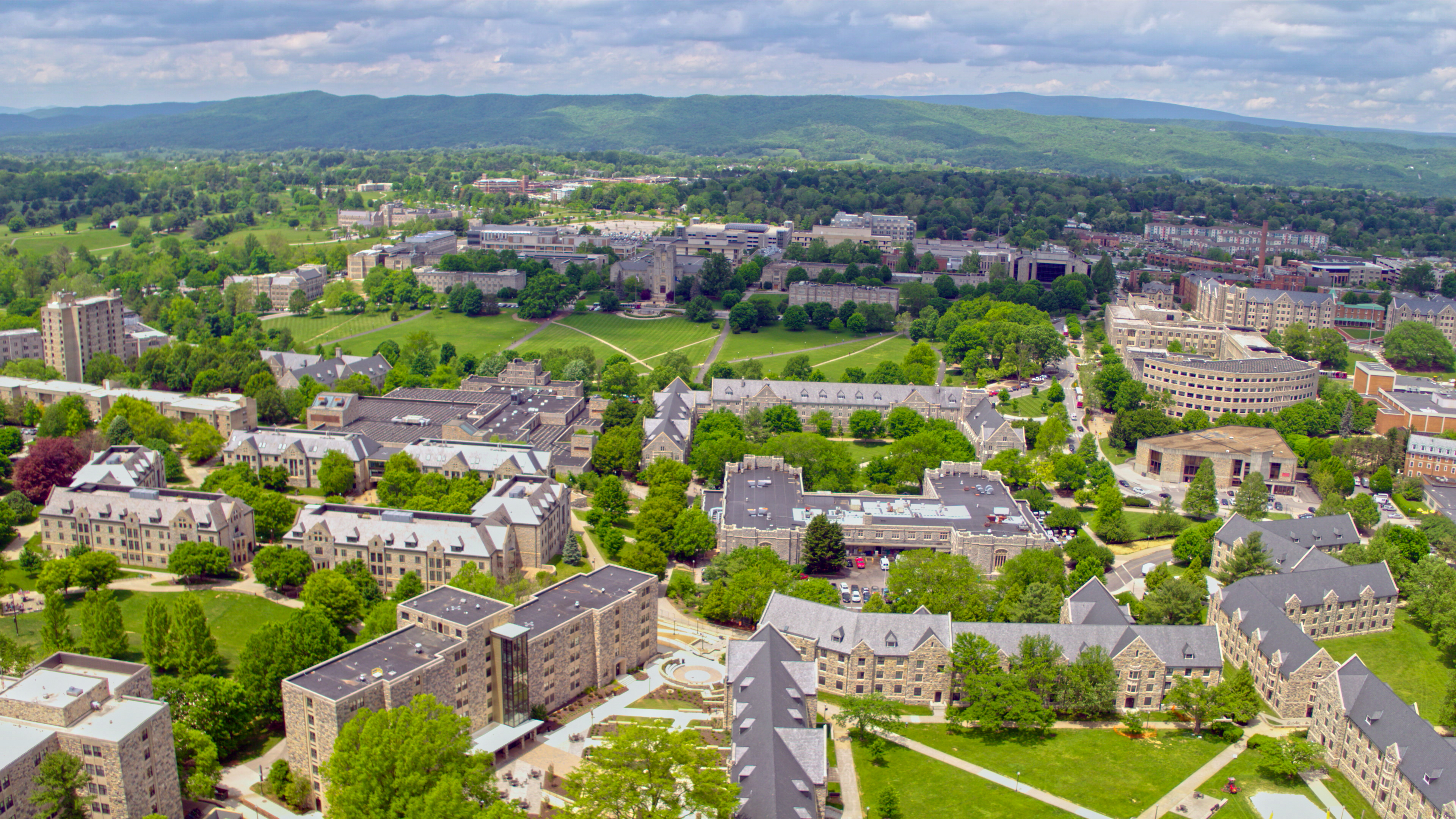
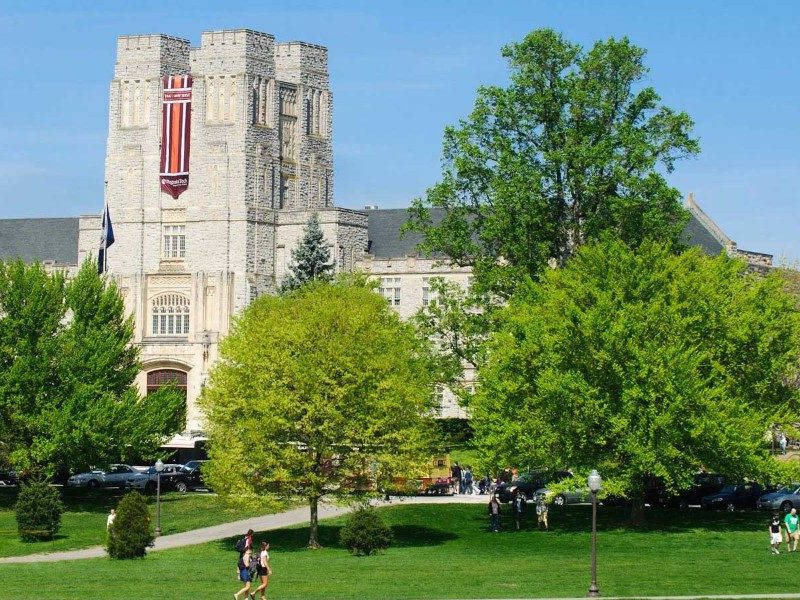
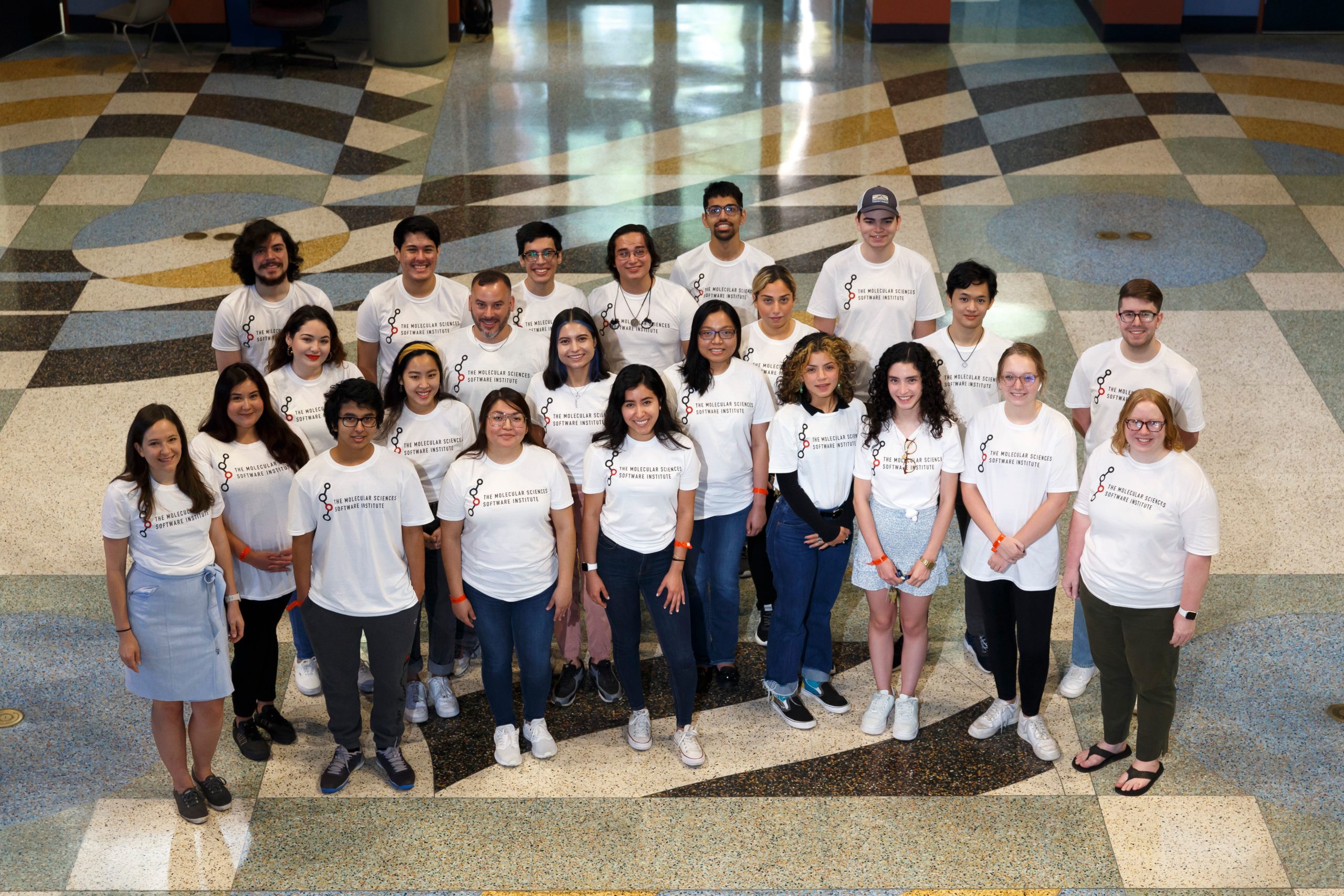
The 2026 annual MERCURY Conference for undergraduate computational chemistry will be held the week of July 20, 2026. MERCURY is delighted to have Prof. Daniel Crawford and the Molecular Sciences Software Institute host the conference on the Virginia Tech campus in Blacksburg, VA.

The conference includes six outstanding plenary speakers, an undergraduate poster session, and evening social and networking events. The conference is an excellent forum for undergraduates to present their work and to learn from experts in the field, allowing them to put their own research into perspective. It is equally valuable as a networking event for faculty working with undergraduates. Undergraduates from all types of institutions are invited to come present their work.

How to Get Here

About the MERCURY Consortium

The consortium, known as the Molecular Education and Research Consortium in Undergraduate computational chemistry (MERCURY) was founded in 2001 with the goal of establishing research collaboration among seven computational chemistry faculty from primarily undergraduate institutions (PUIs). The consortium members share NSF-funded computational facilities and meet at an annual MERCURY conference to network and present their research.

Workshop

MolSSI Special Workshop

The Molecular Sciences Software Institute will offer a workshop for undergraduate students that focuses on Molecular Docking with Python.

The workshop is open to undergraduate students and faculty attending the MERCURY Conference at no additional charge, thanks to sponsorship from the Molecular Sciences Software Institute.

Please indicate on your registration form if you plan to attend the MolSSI workshop.

schedule

Travel and Schedule Information

Participants attending the MolSSI workshop should plan to travel to Blacksburg on Monday, July 20.

Other conference attendees should plan to arrive the afternoon of Wednesday, July 22.

The conference kicks off on Wednesday night with the opening reception at Wednesday night. All times are in Eastern Time (EST, UTC-05:00).

The conference schedule is subject to change, so please check back for updates.

  • 4:00 PM - 7:00 PM

    Dorm Check-in at New Classroom Building (NCB)

  • 6:00 PM - 7:00 PM

    Dinner at Dining Hall

    ‘D2’ dining facility at Dietrick Hall
  • 7:30 AM - 8:30 AM

    Breakfast at Dining Hall

    ‘D2’ dining facility at Dietrick Hall
  • 9:00 AM

    Start of MolSSI Workshop

    New Classroom Building, Room 120
    Schedule Change: WAS Room 160, this is literally next door
  • 10:30 AM - 11:00 AM

    AM Break

  • 12:30 PM - 1:30 PM

    Lunch at Dining Hall

    ‘D2’ dining facility at Dietrick Hall
  • 2:30 PM - 3:00 PM

    PM Break

  • 4:00 PM

    Conclusion of MolSSI Workshop

  • 6:00 PM - 7:00 PM

    Dinner at Dining Hall

    ‘D2’ dining facility at Dietrick Hall
  • 7:30 AM - 8:30 AM

    Breakfast at Dining Hall

    ‘D2’ dining facility at Dietrick Hall
  • 9:00 AM

    Start of MolSSI Workshop

    New Classroom Building, Room 120
  • 10:30 AM - 11:00 AM

    AM Break

  • 12:30 PM - 1:30 PM

    Lunch at Dining Hall

    ‘D2’ dining facility at Dietrick Hall
  • 4:00 PM

    Conclusion of MolSSI Workshop

  • 5:00 PM - 6:00 PM

    Staff Meeting at The Inn

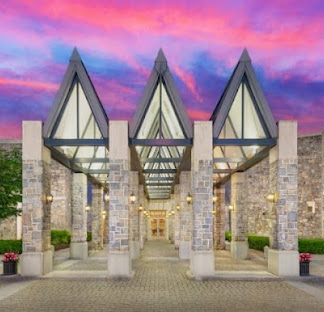
    The Inn at Virginia Tech
  • 6:00 PM - 8:00 PM

    Welcome Dinner Reception at The Inn at Virginia Tech

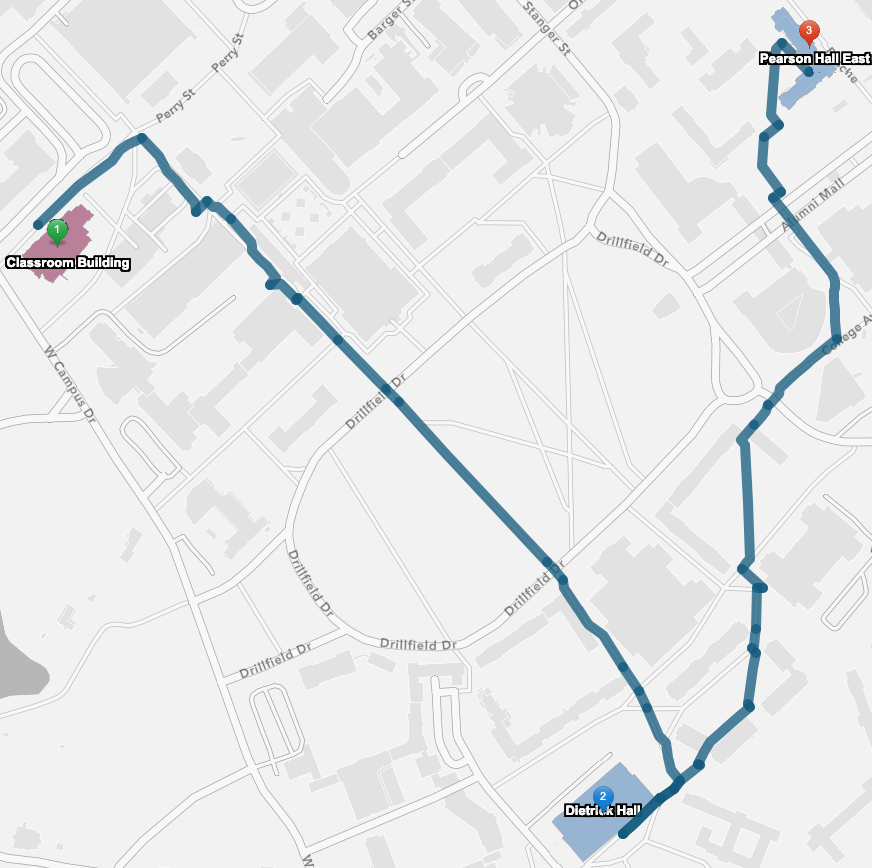
Primary Buildings Map

The main events will be held at New Classroom Building (1).

Provided meals will be avilable at the ‘D2’ dining facility at Dietrick Hall (2).

Provided Dorm rooms are at Pearson Hall East (3).

Its about a 12-15 min walk from the dorm (Pearson East) to the dining hall (Dietrick).
Its about a 12-15 min walk from the dining hall (Dietrick) to the main conference building (Classroom Building).

Conference Map
Speakers

Who’s speaking

We have a number of invited speakers coming to talk about their works and experiences teaching and training computational chemistry.

Each speaker’s talk title is below their card with abstract available on hover or by clicking the title to the speaker’s page.

Rob Parrish

Rob Parrish

Nvidia

Presentation:
Numerical Methods in Quantum Chemistry
My career is based on quickly reading the first few chapters of the introductory quantum chemistry textbook “Szabo and Ostlund” and then spending nearly two decades trying to implement these equations correctly. My first research project as a 20-year-old undergrad was to implement a density-fitted Hartree-Fock code in PSI4. Earlier this year, my teammates and I at NVIDIA released the “cuEST” library for fast quantum chemistry on GPUs … based on a density-fitted Hartree-Fock code. So part of this talk will focus on the importance of hammering over and over on things that we as a field already know very well. We’ll talk a little about tech. We will try to develop a rough idea how fast computers really are, and how quickly they improve with time. We will talk a bit about what computers are good at (hint: matrix multiplication) and what they are not good at (hint: almost anything else unless you try really hard). A huge key to exploiting the amazing power of modern silicon is the ability to transform differential equations into linear algebra problems, which is the whole field of numerical methods. So we’ll work through some quick illustrations on that.  We’ll talk a little about careers. One thing to emphasize here is that you can do what you want to do almost anywhere… if you try hard enough. A small piece of evidence for this is that my friends and I have somehow managed to pay the rent while engineering quantum chemistry codes at universities, national labs, startups, and now at Team Green - and it’s always been basically the same job.  Lastly, we will talk about the importance of friendship in science. Two of my mentors from the 20-year-old PSI4 days are my colleagues on the cuEST team at NVIDIA. We’ve been joined by many new and wonderful teammates, and every day is still that same long campaign to make the Schrodinger equation more useful. ***Recommended Reading (no quiz):** *How to learn quantum chemistry:* Read and code for yourself the first three chapters of Szabo and Ostlund: [Modern quantum chemistry: introduction to advanced electronic structure theory.](https://nam04.safelinks.protection.outlook.com/?url=https%3A%2F%2Fchemistlibrary.wordpress.com%2Fwp-content%2Fuploads%2F2015%2F02%2Fmodern-quantum-chemistry.pdf&data=05%7C02%7Clnaden%40vt.edu%7C7883e21d4a2c4476d2bc08dee0585dd7%7C6095688410ad40fa863d4f32c1e3a37a%7C0%7C0%7C639194867582316760%7CUnknown%7CTWFpbGZsb3d8eyJFbXB0eU1hcGkiOnRydWUsIlYiOiIwLjAuMDAwMCIsIlAiOiJXaW4zMiIsIkFOIjoiTWFpbCIsIldUIjoyfQ%3D%3D%7C0%7C%7C%7C&sdata=KH7ztR2Mhwp046QU47%2Fe0c9jpMxm6MGvg%2Bx3sDnuGx8%3D&reserved=0) *How to learn numerical methods:* Apply for the DOE CSGF fellowship. They will make you take 6x extra grad classes you didn’t want to take. If you survive you’ll be a numerical scientist. Or just do it all in one course: P. Moin, [Fundamentals of engineering numerical analysis.](https://nam04.safelinks.protection.outlook.com/?url=https%3A%2F%2Fwww.cambridge.org%2Fcore%2Fbooks%2Ffundamentals-of-engineering-numerical-analysis%2FD6B6B75172AD7A5A555DC506FDDA9B99&data=05%7C02%7Clnaden%40vt.edu%7C7883e21d4a2c4476d2bc08dee0585dd7%7C6095688410ad40fa863d4f32c1e3a37a%7C0%7C0%7C639194867582331951%7CUnknown%7CTWFpbGZsb3d8eyJFbXB0eU1hcGkiOnRydWUsIlYiOiIwLjAuMDAwMCIsIlAiOiJXaW4zMiIsIkFOIjoiTWFpbCIsIldUIjoyfQ%3D%3D%7C0%7C%7C%7C&sdata=CHtJmZPpgeKSWDecxs2iWTCgFhHeCoUiuhSxUGjUEXE%3D&reserved=0) *How to learn CUDA:() Read and code for yourself all of Mark Harris’s blog posts, starting with [this one](https://developer.nvidia.com/gpugems/gpugems3/part-v-physics-simulation/chapter-31-fast-n-body-simulation-cuda).

Sharani Roy

Sharani Roy

UT Knoxville

Presentation:
Understanding Surface Chemistry at the Atomic Level using Theory and Computation
Surface chemistry is everywhere! We observe it in the weathering of rocks, the discoloring of fruit, the rusting of iron, the writing of chalk or marker on a board, the melting of an ice cube... the list is endless! It also underpins technologies that are critical for the functioning of modern society, such as heterogeneous catalysis and nanotechnology. My research program aims to understand these chemical processes at the atomic level using theory, modeling, and simulations. To unravel complex surface phenomena, we distill them into their elementary steps. For example, we develop models to answer questions such as: How does an atom or molecule bind (adsorb) to a solid surface? Once bound, how does an adsorbate move (diffuse) on the surface? How does one adsorbate interact with another adsorbate? How does the surface catalyze a reaction between two adsorbed species? How are energy and charge exchanged between an atom/molecule and the surface? We assemble our knowledge of these conceptual building blocks to advance the fundamental understanding of areas such as adsorption, catalysis, and molecular electronics. I will present our recent progress towards unraveling how oxygen atoms adsorb in different ways on a silver surface and how the resulting O/Ag material catalyzes the formation of ethylene oxide. I will also show our exploration of conductance and chemical dynamics of single-molecule junctions, prototypical quantum devices comprised of electrode-molecule-electrode systems in which the molecule-metal interface drives a current across the junction under an applied voltage.

Valerie Welborn

Valerie Welborn

Virginia Tech

Presentation:
How Proteins Guide Ions: Electric Fields, Molecular Simulations, and Random Walks
Ion channels are protein pores that control the movement of ions across cell membranes, making them essential for electrical signaling, muscle contraction, and many other biological processes. Although we can measure ion flow experimentally, it is much harder to see how individual atoms, water molecules, and protein motions work together to guide ions through a channel. In this talk, I will introduce molecular electric fields as a way to describe the forces that ions experience inside a dynamic protein pore. Rather than moving through an empty tunnel, ions interact with charged residues, polar groups, water molecules, and the fluctuating channel environment. Molecular dynamics simulations of voltage-gated sodium channels show that these interactions create organized electric fields that influence ion transport. Electric-field analysis therefore provides a physical link between atomistic simulations and the biophysical mechanisms of ion channels. I will then discuss how the information from these electric fields can be incorporated into continuous-time random walk models, which describe ion motion as a series of jumps and waiting times through a changing channel environment. These models help connect molecular-level interactions to experimentally measurable transport properties. Together, these examples show how computational chemistry can translate molecular motion into biophysical insight.

Register

Sign up to attend the conference!

Registration fees include on-campus housing in a dormitory (specific dorm will be chosen in early May) and meals during the conference. Note that conference attendees staying in the dorms will need to bring their own linens, towels, and all other needed toiletry items.

Deadlines

Conference and Workshop Registration Deadline: June 29th, 2026 (Closed)

Abstract Submission for Poster Deadline: Friday July 10th (Closed) - Limit 1 - 48in x 36in poster size.

Students who wish to present a poster during the poster session at the conference should submit their abstract at the link below. The abstract is limited to 150 words and one graphic. The graphic you upload will be shown during your flash talk. If you need help preparing your abstract, please consult the American Chemical Society abstract writing tips or talk to your research advisor.

Sponsors

Sponsors and Donors for the Mercury Conferences

This Year’s Sponsors

2025 Conference Sponsors

2024 Conference Sponsors

Venue Information
July 22-24, 2016

Virginia Polytechnic Institute (Vriginia Tech)
Blacksburg, VA; U.S.A.

Plan your trip